
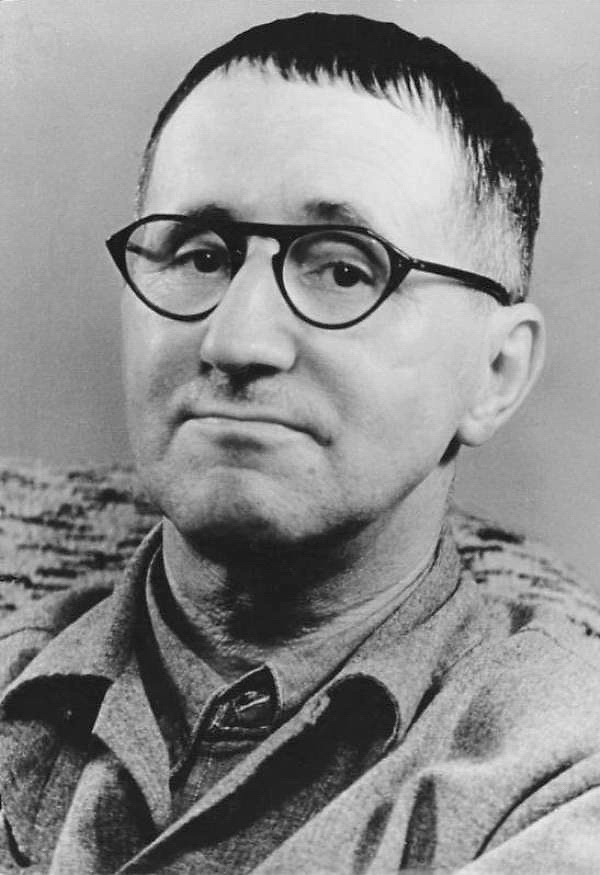
There is an unheralded modernist Brechtian aspect to some pop music. By Brechtian I mean a technique used by Bertolt Brecht, the famous playwright, in his theatre. This technique was sometimes called the 'alienation effect'. It was a way to distance the audience from too close an identification with the characters being played in the performance, so that they were not, in a sense, hypnotised by the narrative but relatively distanced. This technique is not to be confused with alienation in the more usual usage, such as by Marx or Durkheim, where it describes a negative state of mind or feelings. In fact, Brecht"s effect could be regarded as a kind of antidote to alienation in the ttraditional sense.
When I was young I found myself liking certain types of popular music across the genres that they belonged to, and this made some things a little awkward, given it involved transgressing specific fashions that went with the genres and different peer groups. There was a time when I liked Ska and some reggae of the Trojan records type, but also Jimi Hendrix and Cream. The fashions that went with these two kinds of music were completely different, the former being generally skinhead and the latter hippie. I had this way of being more of a skinhead at my school, a secondary modern mixed comprehensive, but out of school I could be more of a hippie (this sounds difficult especially with the hair but we had feathered haircuts that could be long). But the two fashions were more than just that, of course they were ways of acting and living. The media was critical of both but the more working class skinhead fashion and the music was often framed in the media of the time as racist, even though it was obvious we liked black music. In my school there was a black skinhead girl, she was tough. Most of the free images of skinheads are of more recent origin, I don't remember seeing any swastikas on skinheads in the 1970s, later this was a punk thing and I suppose there was some crossover in styles then. Ironically the most white music was 'cock rock' with their anthems.
_taken_by_Alan_Lomax.jpg "Huddie Leadbetter (Leadbelly) Wikimedia")
The attitude of the skinheads was, at least superficially, completely opposite to the hippies, skinheads embraced violence or at least did not shy away from it, and were cynical about liberal attitudes. The hippies were into peace and love and flower power, although of course they protested. My skinhead style was not the full on crew cut hair, red braces, whiteT-shirt, Levi 501s and boots, but the variant that was more common at school, Levi Sta-Prest trousers, loafers or brogues, Ben Sherman shirts, maybe a tank top jumper. It may seem, because of the media, that skinheads were right-wing in politics, but I was not aware of this personally, some were right wing, others were not, like myself, I was a socialist, my Dad was a shop steward, but skinheads were more from the working class, while hippies seemed to be more bourgeois.

So what about the music? You can see that the difference in these so called sub-cultures made it difficult to like music across this divide, but I did, because I found something similar in certain artists. For instance, I liked the sound of early Bob Dylan records, and I liked the sound of some of Ken Boothe, and Prince Buster. To just jump around a bit (probably in time as well as across these boundaries), Jimi Hendrix sometimes reminded me of Ska. The feature that made the similarities was, I would now say, the Brechtian effect, the rather raw, obviously also electronically mediated, 'mistake' filled, sound that 'revealed the transaction' between the techniques producing the sound and the listener. The Beach Boys had partially developed this sound, and so had others, the Shangri-Las, the Phil Spector wall of sound, it goes back to Leadbelly (Huddie Leadbetter) maybe. Ok, it is not just a sound, it is the arrangement, so partly also a studio product. Some of it merges into blues with Janis Joplin's band Big Brother and the Holding Company.
Clearly, wI am not talking about such pop music being radical in what it says in its lyrics, its stories, the 1960s 'protest songs' for instance, but more its form, and this form was not specific to a particular genre.
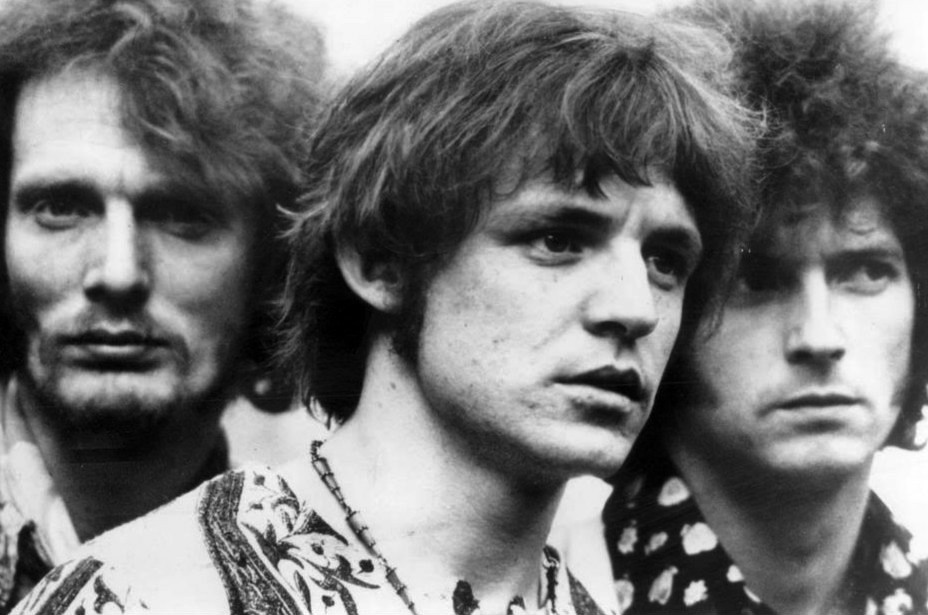
When I finally became an art student it was easier to negotiate these differences. Art students have their own weirdness and did not fit into anything very obviously, but it still bothered me, or to be more accurate saddened me, that my new peer group was generally more hippie and more embracing of that cultural position, because they were more bourgeois. In the meantime I was becoming more bourgeois, leaving behind my now proscribed skinhead past, and in a sense also my family. This made me want to understand what was going on with these categories into which I did not easily fit. It seemed to me that something was being censored by the media frame, not to put it too finely, and we were being channeled away from this Brechtian formal aspect of radicalism that crossed over these dividing lines.